
How to Teach a Dog to Drop Items on Cue: A Positive Reinforcement Training Guide
Every dog owner eventually faces the classic canine dilemma: your furry companion picks up something they definitely should not have, whether it is a stray sock, an expensive shoe, or an unidentifiable object in the backyard. Lunging forward to pry their jaws open manually often triggers resource guarding or turns the situation into a high-stakes game of keep-away. Fortunately, you can master how to teach a dog to drop items on cue using calm, force-free, positive reinforcement methods. By transforming the release into a rewarding exchange, you build trust, improve impulse control, and protect your dog from swallowing dangerous objects.

Educational Note: This article is designed for educational purposes and does not replace professional behavioral or veterinary guidance. If your dog exhibits severe resource guarding or aggression around objects, consult a certified positive reinforcement dog trainer or veterinary behaviorist.
Understanding the Psychology Behind the Drop Cue
To successfully teach a dog to drop items on cue, you must understand how dogs perceive possession. Canines are natural scavengers and predators. When they secure an item, their instinct is to protect it. Forcing an item out of a dog's mouth sends a clear message that humans are competitors who steal valuable resources. This often leads to defensive behavior and escalates minor scavenging into intense resource guarding.
Positive reinforcement flips this psychological script entirely. Instead of teaching your dog that letting go means losing something forever without compensation, you teach them that relinquishing an item results in an even better reward. When practiced consistently over time, the cue becomes an automatic reflex rather than an emotional battle of wills. The dog learns that giving up a forbidden item leads to high-value treats, praise, or even the return of the original item in a safe manner.
Furthermore, understanding canine body language during possession is critical. Whale eyes, stiffening of the neck, freezing, low growls, or curling the lips are all clear warning signs that a dog feels threatened. Recognizing these cues early allows handlers to de-escalate potential conflicts by stepping back and utilizing high-value trading items instead of advancing toward the dog aggressively.
Dogs live in the present moment, meaning their decision-making is heavily influenced by immediate consequences. If every time your dog drops an item, they receive something vastly superior, their brain forms a strong neural pathway associating the act of releasing with positive outcomes. This is the cornerstone of cooperative communication between species, moving away from dominance theories and stepping into modern, science-based behavioral psychology.
Phase 1: Setting Up for Success in a Low-Distraction Environment
Training a complex behavior like a reliable release requires setting the proper stage. Do not start your first training sessions when your dog has just snatched a forbidden item off the kitchen counter in a state of high arousal. Instead, initiate practice during calm moments when your dog is relaxed and receptive to learning new concepts.
- Choose Your Marker Word: Pick a clear, distinct cue word such as "Drop" or "Drop it." Avoid using words that sound too similar to other commands like "Down" or "Off" to prevent confusion.
- Gather High-Value Reinforcements: Prepare pea-sized pieces of exceptional treats, such as boiled chicken, lean roast beef, or specialized training treats that your dog rarely receives during normal daily routines.
- Select Safe Practice Items: Use two identical, low-value dog toys rather than household items for the introductory phase to keep the game fair and fun.
- Control the Environment: Choose a quiet room free from outside noises, other pets, or family member interruptions to maximize your dog's focus.
Establishing this controlled baseline allows your dog to experience success early and often. When setting up these sessions, make sure you have your rewards easily accessible in a treat pouch or placed on a nearby high table rather than fumbling around in a deep bag, which can distract your dog and break their concentration.
Phase 2: Step-by-Step Guide to the "Trade" Game
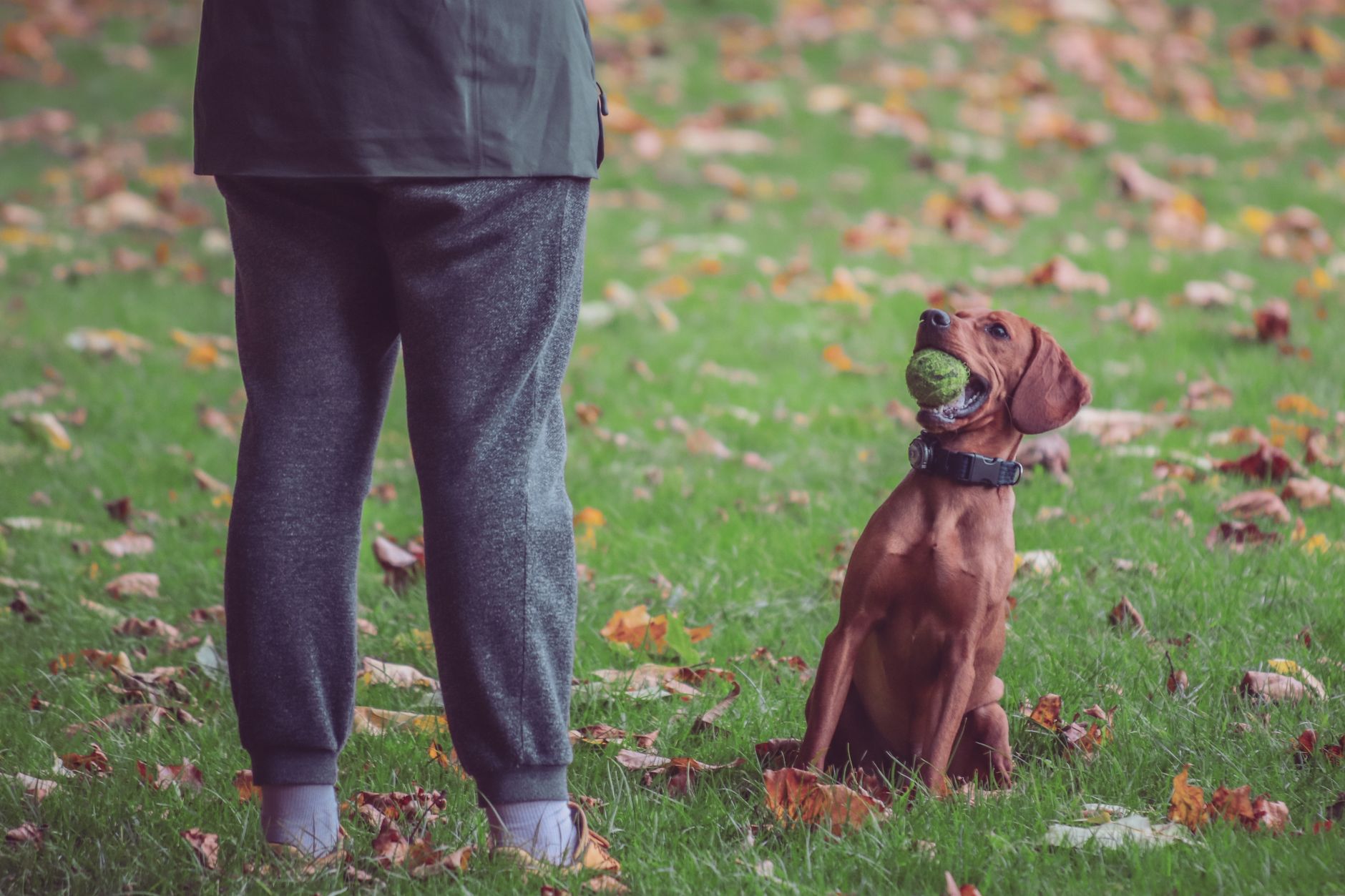
The foundation of a reliable release is the trade game. Dogs quickly learn that letting go of item A immediately unlocks access to item B or a delicious food reward, creating a cooperative dynamic.
Step 1: Present a Toy
Engage your dog with a standard, boring toy. Let them sniff it or hold it in their mouth for a few seconds while keeping your body relaxed, neutral, and unthreatening.
Step 2: Introduce the High-Value Treat
Bring a high-value treat right up to your dog's nose. Because the aroma is intense and irresistible, your dog will naturally open their mouth to investigate or eat the treat, releasing the toy in the process without any physical pressure.
Step 3: Say the Cue and Reward
The exact millisecond the toy falls from their mouth, say your cue word ("Drop") and immediately deliver the high-value treat. Allow them to consume it, then release them back to the toy if appropriate, or store the toy away temporarily to reset.
Step 4: Practice Consistency and Repetition
Repeat this trade sequence five to ten times per session, keeping sessions short (around three to five minutes). Short, positive sessions prevent mental fatigue and keep enthusiasm high for both you and your dog.
As your dog begins to understand the routine, you can introduce the verbal cue slightly earlier—just a fraction of a second before they release the item—so they begin anticipating the word's meaning in connection with the action and the subsequent reward.
Phase 3: Generalizing and Raising the Criteria
Once your dog reliably drops the toy in exchange for a treat in a quiet room, it is time to generalize the behavior across different settings and distractions. Consistent repetition builds fluency and ensures the cue holds up in real-world scenarios.
- Increase Distractions Gradually: Move your practice sessions from a quiet living room to a hallway, then to a quiet backyard, and eventually to areas with mild household activity.
- Vary the Items: Gradually introduce new objects into the training routine, moving from stuffed toys to rubber chew toys, sturdy ropes, and eventually safe non-toy items under controlled conditions.
- Add Distance and Duration: Practice asking your dog to drop an item while they are a few feet away from you rather than right at your feet, testing their responsiveness across space.
- Incorporate Real-Life Scenarios: Simulate unexpected finds by placing old safe items on the floor and practicing the cue when your dog approaches them naturally.
Generalization is often where owners stumble. Dogs are situational learners, meaning a dog that drops a toy perfectly in the kitchen may act completely clueless when asked to do the same thing in the living room or out on a neighborhood walk. By systematically shifting locations and object types, you bridge the gap between classroom obedience and real-world reliability.
Common Mistakes to Avoid During Training
Even with the best intentions, handlers sometimes make mistakes that stall progress. Avoid these common pitfalls to keep your training positive and effective:
- Chasing the Dog: Running after a dog who has a forbidden item turns the scenario into a high-stakes game of chase. Instead, run away from your dog while making exciting noises so they chase you toward the treat jar.
- Forcing Jaws Open: Prying your dog’s mouth open damages trust and increases the risk of accidental bites or worsening resource guarding behaviors.
- Failing to Reward: If you ask your dog to drop an item and take it away without offering a reward, they will learn that compliance leads to disappointment. Always pay your dog for their cooperation.
- Inconsistent Cues: Using multiple words like "Drop it," "Give it," "Leave it," and "Drop" interchangeably confuses your dog. Stick to one primary cue for releasing items already in the mouth.
- Training Only During Emergencies: If you only use the "Drop" cue when your dog has something dangerous, they learn that hearing the word means the fun ends. Practice with fun toys frequently so the cue remains positive.
Avoiding these traps requires patience and mindfulness. Remember that your dog's instinctual drive to hold onto items is natural. By reframing every training interaction as a partnership rather than a power struggle, you foster long-term compliance and emotional stability in your pet.
Integrating Enrichment and Mental Stimulation
Dogs that frequently scavenge or steal items often do so because they are under-stimulated or lack appropriate outlets for their natural chewing, shredding, and investigating instincts. Incorporating positive enrichment into your daily routine reduces the frequency of unwanted grabbing by fulfilling their biological needs.
To help balance your dog's physical and mental needs, you can explore tools like the Pet Enrichment Idea Generator to discover new puzzle toys, interactive games, and scent work activities that channel their curiosity constructively. Additionally, managing daily activity levels using a Dog Exercise Planner ensures your dog burns off excess mental and physical energy in structured ways, reducing boredom-driven scavenging.
Enrichment goes beyond physical exercise; it challenges a dog's cognitive faculties. Providing snuffle mats, interactive food dispensers, and supervised foraging games allows dogs to engage their natural predatory sequence—search, stalk, chase, grab, and kill—in a safe, indoor-friendly manner that satisfies their deep-seated evolutionary urges.
Special Considerations for Puppies vs. Adult Dogs
Training a young puppy differs significantly from working with an adopted adult dog. Puppies explore the world entirely through their mouths, meaning dropping items is an hourly occurrence. For puppies, management is your best friend: keep floors clear of hazards, use playpens, and reward every voluntary drop immediately to build lifelong habits.
Adult dogs, especially rescues with unknown histories, may carry baggage regarding human interaction with their food and toys. With rescue dogs, go slowly. Never test their limits by taking items away forcefully. Always establish a strong foundation of trading in neutral territory before expecting cooperation when they possess high-value stolen items like food wrappers or prized chew bones.
For senior dogs, stiffness or dental discomfort can sometimes influence how they interact with objects. If an older dog suddenly becomes reluctant to release items or exhibits uncharacteristic stiffness around their jaw, a veterinary checkup is essential to rule out dental pain, arthritis, or oral injuries before continuing rigorous training protocols.
Frequently Asked Questions
What is the difference between "Leave it" and "Drop it"?
"Leave it" means your dog should ignore an item before they ever touch or pick it up. "Drop it" means your dog already has the item in their mouth and needs to release it immediately upon hearing the cue.
What should I do if my dog grabs a dangerous or toxic object?
Never chase or panic. Use your highest-value trade item, such as a piece of cooked meat or a spoonful of canned dog food, to entice them to drop the dangerous object safely, then immediately remove the item and contact your veterinarian or pet poison helpline if ingestion occurred.
How long does it take for a dog to learn the drop cue?
Every dog learns at their own pace, but with short, daily 5-minute training sessions, many dogs grasp the fundamental trade concept within one to two weeks, though generalizing takes longer.
Can I train an older dog to drop items?
Yes. Dogs of any age can learn new behaviors through positive reinforcement. Older dogs may take slightly longer to unlearn habits, but consistency and high-value rewards yield exceptional results.
Should I punish my dog if they refuse to drop an item?
No. Punishment creates fear, damages the bond between you and your pet, and often escalates resource guarding into defensive aggression. Stick to management and high-value trades.
What if my dog grabs the treat and immediately grabs the toy back?
This happens when the dog feels rushed or when the treat is delivered too close to the toy. Deliver multiple small treats sequentially while holding the dropped item away, or feed them away from the object before they can re-engage with it.
Helpful PawPrintHub Tools
Explore these free interactive tools to support your dog care and training journey:
Conclusion
Teaching a dog to drop items on cue is an essential skill that blends safety, communication, and mutual respect. By avoiding force, embracing positive reinforcement, and turning the release into an exciting trade, you empower your dog to make great choices voluntarily. Consistent practice in calm environments transforms potential household battles into seamless moments of cooperation, ensuring a safer, happier, and more harmonious home for both you and your canine companion.
Support free pet guides and tools.
Buy Me a Coffee
Comments
Post a Comment