
How to Teach a Dog to Stop Begging for Food: A Positive Reinforcement Guide
Few behaviors test a pet owner's patience quite like a pair of soulful, unblinking eyes tracking every single bite you take at the dinner table. Canine begging can manifest as intense staring, gentle pawing, whimpering, drooling, or even barking the moment a fork leaves your plate. While it might seem harmless to slip your furry companion a stray piece of chicken or a stray french fry, this habit quickly snowballs into a persistent nuisance that disrupts peaceful household meals and can even lead to nutritional imbalances or digestive upset if human seasonings disagree with your pet.
Fortunately, you can successfully teach a dog to stop begging for food without harsh corrections, yelling, or physical punishment. By relying on positive reinforcement, establishing clear boundaries, and managing your household routines, you can transform your dog into a calm, polite observer during human mealtimes. This comprehensive guide walks you through the psychology of begging, step-by-step training protocols, species-specific adjustments, common pitfalls to avoid, and effective management tools to restore peace to your dining room.
Addressing begging requires a mindset shift. Many owners view begging as stubbornness or disobedience, but from your dog's perspective, it is a highly successful learned behavior. When you break down the mechanics of why dogs beg, how intermittent rewards fuel the habit, and how to set up your environment for success, training becomes an empowering journey for both you and your canine companion.

Understanding Why Dogs Beg for Food
Before diving into training solutions, it helps to understand why dogs beg in the first place. For our canine companions, human food is the ultimate high-value reward. It smells incredible, tastes rich, and appears in abundance several times a day. If your dog has ever received a piece of cheese, steak, or toast from the table, they have learned a powerful lesson: begging works.
Dogs are opportunistic learners. Even if you only share your food one out of every ten times, that intermittent reinforcement acts like a slot machine. It keeps your dog persistently trying because the potential payoff is so high. To eliminate the behavior, you must remove the payoff entirely while teaching your dog an alternative, more rewarding behavior to perform instead.
Furthermore, dogs are naturally social scavengers. In the wild, observing other pack members eat and looking for scraps is a survival instinct. When we sit down at a dining table or gather around a kitchen island, our dogs are simply following hardwired instincts to investigate potential food sources. Recognizing that begging is a natural behavior rather than an act of defiance helps us approach training with patience, empathy, and clarity.
Consider also the sensory experience of your dog. A dog's sense of smell is tens of thousands of times more sensitive than a human's. When you cook a meal rich in fats, proteins, and aromatic spices, your dog experiences an olfactory masterpiece. Being told to ignore that powerful sensory stimulation without a clear alternative is impossible for a dog. Therefore, training must rely on redirection and management rather than expecting your dog to simply suppress their biological drives through sheer willpower.
The Core Principle: Consistency and Management
The foundation of stopping begging behavior is absolute household consistency. If one family member gives in and slips food under the table while another tries to train the dog, the dog will remain thoroughly confused and continue to beg. Every human in the household must commit to the same rules. If the rule is "no table scraps ever," then every single person must adhere to it without exception.
Management is your best friend during the early stages of training. If you are sitting down for a complex holiday dinner or eating a meal where you cannot actively supervise your dog's training, management prevents the rehearsal of bad habits. Utilize baby gates, crate training, or a secure exercise pen to keep your dog in a separate, comfortable area while you eat. Preventing the dog from accessing the dining room breaks the cycle of rehearsal, making your training sessions much more successful when you actively work on them.
Consistency also extends to visitors and children. House guests, visiting relatives, and neighborhood kids should be briefed on your household rules before they sit down to eat. A single well-meaning guest tossing a potato skin can undo weeks of diligent boundary training. Setting up your dog in a comfortable, management zone during dinner parties is often the kindest and most effective strategy for everyone involved.

Step-by-Step Training Plan to Stop Begging
When you are ready to actively train your dog, follow this step-by-step positive reinforcement approach to replace begging with calm behavior.
Step 1: Establish a Designated Place
Teach your dog a reliable "place" or "bed" command. This gives your dog a specific location to go to whenever human food is present. Choose a comfortable mat, dog bed, or crate located a reasonable distance away from the dining table or kitchen counter. Practice sending your dog to this mat during non-meal times first, rewarding them heavily when they settle down on it.
Step 2: Reward Alternative Behaviors
When you prepare to eat, cue your dog to go to their mat. The moment your dog lies down on the mat, reward them generously with a high-value treat specifically reserved for this exercise—not human table scraps. You want the mat to represent a jackpot of rewards, but only when they are lying down quietly. Over time, pair the cue with the action of you sitting down with your own plate.
Step 3: Ignore All Begging Attempts
If your dog leaves the mat, whimpers, or stares at you from the edge of the chair, become entirely uninteresting. Do not look at your dog, do not speak to them, and do not push them away physically. Any form of attention—even negative attention like scolding or pushing—acts as a reward for a determined dog. Wait until your dog offers a calm behavior, such as looking away or lying back down, before acknowledging them.
Step 4: Use Long-Lasting Enrichment
If your dog struggles to remain calm during human meals, provide them with a distraction that occupies their brain and mouth simultaneously. A stuffed, frozen puzzle toy filled with dog-safe peanut butter, plain yogurt, or canned dog food can keep your dog happily occupied in their designated spot while you enjoy your meal in peace. For customized mental stimulation ideas, explore our Pet Enrichment Idea Generator to find engaging activities that tire out your dog's mind.
Gradually increase the duration your dog is expected to remain on their mat. Start by treating them every few seconds for staying down, then stretch the interval to ten seconds, thirty seconds, a minute, and eventually through an entire meal course. By building duration slowly, you set your dog up for continuous success rather than frustrating failure.
Species-Specific Steps and Household Routines
Different dogs have varying energy levels, drives, and intelligence levels, which means your approach can be tailored slightly to fit your dog's specific temperament:
- High-Energy Working and Herding Breeds: Breeds such as Border Collies, Australian Shepherds, and German Shepherds possess high mental and physical stamina. They may require rigorous physical exercise and a complex puzzle feeder right as you sit down for dinner to prevent pacing and whining.
- Food-Obsessed Breeds: Labs, Beagles, and Pugs are famously driven by food and will test boundaries relentlessly. For these breeds, strict environmental management (such as placing them behind a baby gate) is often necessary during the initial weeks of training so they do not accidentally rehearse begging.
- Senior Dogs or Low-Energy Companions: Older dogs may already be calm, but if stiffness makes a hard mat uncomfortable, ensure their designated "place" is an orthopedic bed that supports their joints while they wait.
- Independent or Sighthound Breeds: Greyhounds, Whippets, and Salukis may prefer a cozy corner draped with soft blankets rather than a standard flat mat. Catering to their desire for comfort encourages them to settle willingly.
Establishing a predictable household routine helps immensely. Feed your dog their own balanced meal right before you sit down for yours. A full stomach naturally decreases immediate food motivation, making it much easier for your dog to rest quietly on their mat while you eat. Additionally, scheduling a brisk walk or an interactive game of fetch prior to dinnertime burns off excess energy, leaving your dog relaxed and ready to rest.

Common Mistakes to Avoid
Even well-intentioned owners frequently sabotage their own training progress. Watch out for these common pitfalls:
- Inconsistent Rules: Letting your dog have scraps just "this once" or letting guests sneak food under the table resets all your training progress back to zero.
- Accidental Reinforcement: Feeding your dog away from the table immediately after dinner teaches them that begging eventually pays off if they wait long enough. Always wait a significant period after your meal before interacting with your dog with food.
- Unmet Physical Needs: Expecting a high-energy dog to lie quietly without prior exercise sets them up for failure. Make sure your dog has burned off excess energy before mealtimes. You can easily plan adequate daily activity using our Dog Exercise Planner.
- Lack of Patience: Behavioral changes take time. If your dog has been begging for years, it will take weeks of consistent redirection to change their perspective.
- Giving In to Extinction Bursts: When you first stop giving scraps, your dog's begging may temporarily get worse before it gets better (known as an extinction burst). Giving in during this phase teaches your dog that they simply have to beg louder or longer to get what they want.
- Using Harsh Punishments: Yelling, throwing objects, or using physical corrections creates fear and anxiety around human eating areas. This can lead to defensive aggression or stress-induced behaviors rather than polite relaxation.
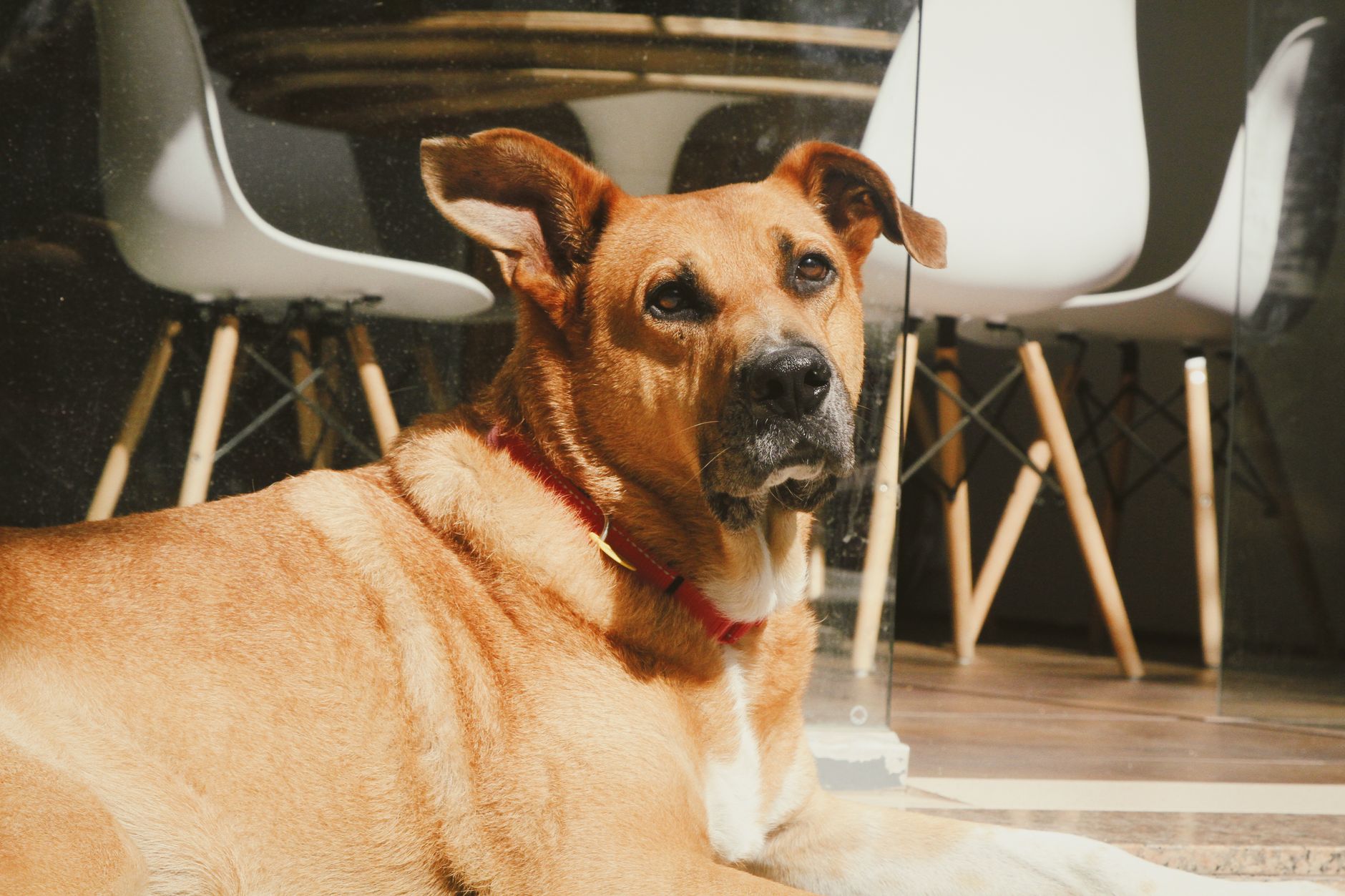
Practical Example Scenario: The Family Dinner
Imagine the typical evening routine: You are preparing dinner in the kitchen, and your dog is circling your feet, waiting for something to drop. Instead of stepping over your dog or offering a stray carrot piece, you cue your dog to go to their designated mat in the corner of the kitchen, rewarding them with a kibble when they touch it. As you plate your food, you hand them a frozen interactive toy filled with dog-safe yogurt. You walk to the dining table and eat your meal in peace while your dog happily licks their toy on their mat. Once you finish eating and clear the table, you remove the toy. By repeating this sequence every single evening, your dog learns that kitchen prep and human mealtimes mean it is time to work on their own puzzle mat rather than harass you for table scraps.
To build upon this scenario, suppose you have children who tend to drop food accidentally. You can pair your dog's mat training with a "clean up" rule for kids, teaching children to place dropped food into a designated bowl on the counter rather than feeding the dog directly. When the entire family acts as a cohesive unit, the mixed signals disappear, and your dog's impulse control solidifies remarkably fast.
When to Seek Professional Guidance
In most cases, food begging is simply a trained habit that responds wonderfully to positive reinforcement and management. However, if your dog displays extreme anxiety, resource guarding around human food (such as growling or snapping when approached near the table), or obsessive compulsive behaviors such as frantic pacing and relentless vocalization, consult a certified professional dog trainer or veterinary behaviorist.
Resource guarding—where a dog feels compelled to protect their food source or scavenged items—is a serious behavioral issue that goes beyond simple table manners. If your dog stiffens, curls their lip, or growls when you walk past them near dropped food, do not attempt to punish them. Instead, safely manage the environment using gates and consult a qualified positive reinforcement professional who specializes in aggression and resource guarding modification.
Disclaimer: This educational article is intended for behavioral guidance and informational purposes only. It does not replace professional veterinary advice or behavioral therapy. If your dog exhibits sudden changes in appetite, excessive begging paired with weight loss, or signs of physical distress, consult your veterinarian to rule out underlying medical conditions.
Frequently Asked Questions
Why does my dog stare at me while I eat?
Staring is a learned behavior. Your dog has associated human eating with the potential reward of food. Over time, staring becomes an automatic habit because your dog is waiting to see if you will share.
Is it okay to feed my dog table scraps occasionally?
While some plain vegetables or lean meats can be healthy in moderation, feeding from the table encourages begging and poor mealtime manners. If you wish to share healthy snacks, place them directly into your dog's regular food bowl after your meal is finished so they do not associate human plates with food.
How long does it take to stop a dog from begging?
The timeline varies based on how long the habit has been reinforced. With 100% household consistency and proper management, most dogs show significant improvement within two to four weeks of dedicated training.
Should I scold my dog when they beg?
No. Scolding, yelling, or pushing your dog away often provides attention that inadvertently rewards the behavior. Ignoring the begging completely and rewarding calm behavior on a designated mat is far more effective.
What should I do if my dog begs while guests are over?
Management is key during social gatherings. Place your dog in a separate, comfortable room with a long-lasting puzzle toy or chews before dinner guests arrive to prevent rehearsal of unwanted begging habits.
Can older dogs learn to stop begging?
Yes, dogs of any age can learn new behaviors. While older dogs may have decades of reinforced habits behind them, consistent management, patience, and clear rewards for alternative behaviors will successfully reshape their habits.
What human foods are dangerous to share with dogs?
Many common human foods are toxic to dogs, including chocolate, grapes, raisins, onions, garlic, macadamia nuts, xylitol (artificial sweetener), and cooked bones. Keeping table scraps entirely off-limits protects your dog from accidental poisoning.
Helpful PawPrintHub Tools
To help you maintain a balanced routine and keep your canine companion happy and healthy, explore these useful interactive tools:
- Dog Exercise Planner - Plan daily physical activity to ensure your dog is properly exercised before mealtimes.
- Pet Enrichment Idea Generator - Discover engaging mental stimulation activities to keep your dog occupied during family dinners.
Support free pet guides and tools.
Buy Me a Coffee
Comments
Post a Comment