
Dog Food Portion Control: How to Measure Meals Correctly and Prevent Canine Obesity
Ensuring your canine companion maintains an ideal body condition is one of the most impactful responsibilities of pet ownership. Proper nutrition goes beyond simply purchasing high-quality kibble or wet food; it requires precision, consistency, and a clear understanding of your dog's actual caloric needs. Too often, well-meaning pet parents rely on guesswork, eye-balling scoop sizes, or leaving food out continuously, which frequently leads to unintended weight gain and associated health complications. Implementing strict dog food portion control protects your pet's long-term wellness, supports joint health, and promotes vitality across every life stage.
This comprehensive guide explores the fundamentals of canine nutritional management, detailing how to accurately calculate daily intake, evaluate food labels, avoid common measurement mistakes, and utilize digital planning tools to keep your dog at an optimal weight. Please note that this article is educational and does not replace professional veterinary advice or a personalized nutritional diagnosis.
Overweight conditions in dogs can severely curtail their lifespan, diminish their quality of life, and exacerbate degenerative joint diseases such as hip dysplasia and arthritis. By adopting a proactive stance on portion control, you empower yourself to take total command of your dog's metabolic well-being. From decoding confusing pet food labels to establishing strict daily feeding routines, every step you take brings your furry friend closer to a healthier, more energetic life.

Understanding Canine Caloric Needs and Energy Requirements
Every dog possesses unique daily energy requirements determined by factors such as age, breed, neutered status, metabolic rate, and daily activity levels. A working border collie requires vastly different caloric intake compared to a senior companion whose daily routine consists of leisurely indoor strolls. Understanding these variables forms the foundation of effective dog food portion control. In addition to daily exercise, genetics play an undeniable role in how efficiently a dog processes calories. Some breeds are genetically predisposed to obesity due to metabolic mutations that suppress the sensation of fullness, making external portion control mandatory for their survival and health.
Many pet owners make the mistake of following the generic feeding chart printed on commercial pet food bags without adjustment. These charts often suggest wide ranges that lean toward overfeeding, assuming a high metabolic rate or an intact physiological state. To establish a precise baseline, you can utilize the Pet Food Portion Calculator to determine accurate serving sizes based on your dog's specific weight and lifestyle parameters.
Metabolic energy requirements are typically measured in Kilocalories (kcal) of Metabolizable Energy (ME) per day. Calculating your dog's resting energy requirement (RER) involves using the mathematical formula: 30 multiplied by your dog's weight in kilograms, plus 70, or more accurately for precise metabolic scaling, 70 multiplied by body weight in kilograms raised to the power of 0.75. Once you determine the RER, you apply a multiplier based on life stage and activity level—such as 1.6 for a typical neutered adult dog, or 1.2 for a sedentary senior. This scientific approach removes the guesswork from daily bowl fillings.
Why Free-Feeding Fails Most Dogs
Free-feeding—leaving a bowl filled with dry kibble available all day—might seem convenient, but it bypasses natural portion regulation for most domesticated dogs. Canines evolved as opportunistic eaters who rarely turned down an available meal. When food is accessible constantly, many dogs overconsume, leading to rapid weight gain. Transitioning to structured meal times with measured portions eliminates this risk and allows you to monitor exactly how much your dog consumes daily.
Furthermore, free-feeding makes it nearly impossible to notice early signs of illness. A sudden decrease in appetite is often the very first indicator that a dog is feeling unwell or experiencing dental pain. If food is always sitting in the bowl, you will never notice whether your dog ate breakfast or skipped it entirely until hours later. Structured feeding routines provide an invaluable daily health checkpoint.
The Golden Rule: Weighing vs. Measuring Scoops
When it comes to executing dog food portion control, accuracy matters immensely. Using standard kitchen measuring cups or random plastic scoops often introduces significant human error into the equation. Settling for an 'heaping cup' can easily add twenty to thirty percent more calories to a single meal than intended. Dry kibble is manufactured in irregular shapes that leave air pockets within volume-based measuring cups, meaning two cups of the exact same food can hold vastly different physical weights depending on how densely packed the kibble settles.
For the highest degree of precision, switch from volume measurements to weight measurements using a digital kitchen scale. Weighing dry kibble in grams accounts for density variations, settling, and bag-to-bag inconsistencies. If a scale is not immediately available, ensure you use level measuring cups rather than rounded scoops.
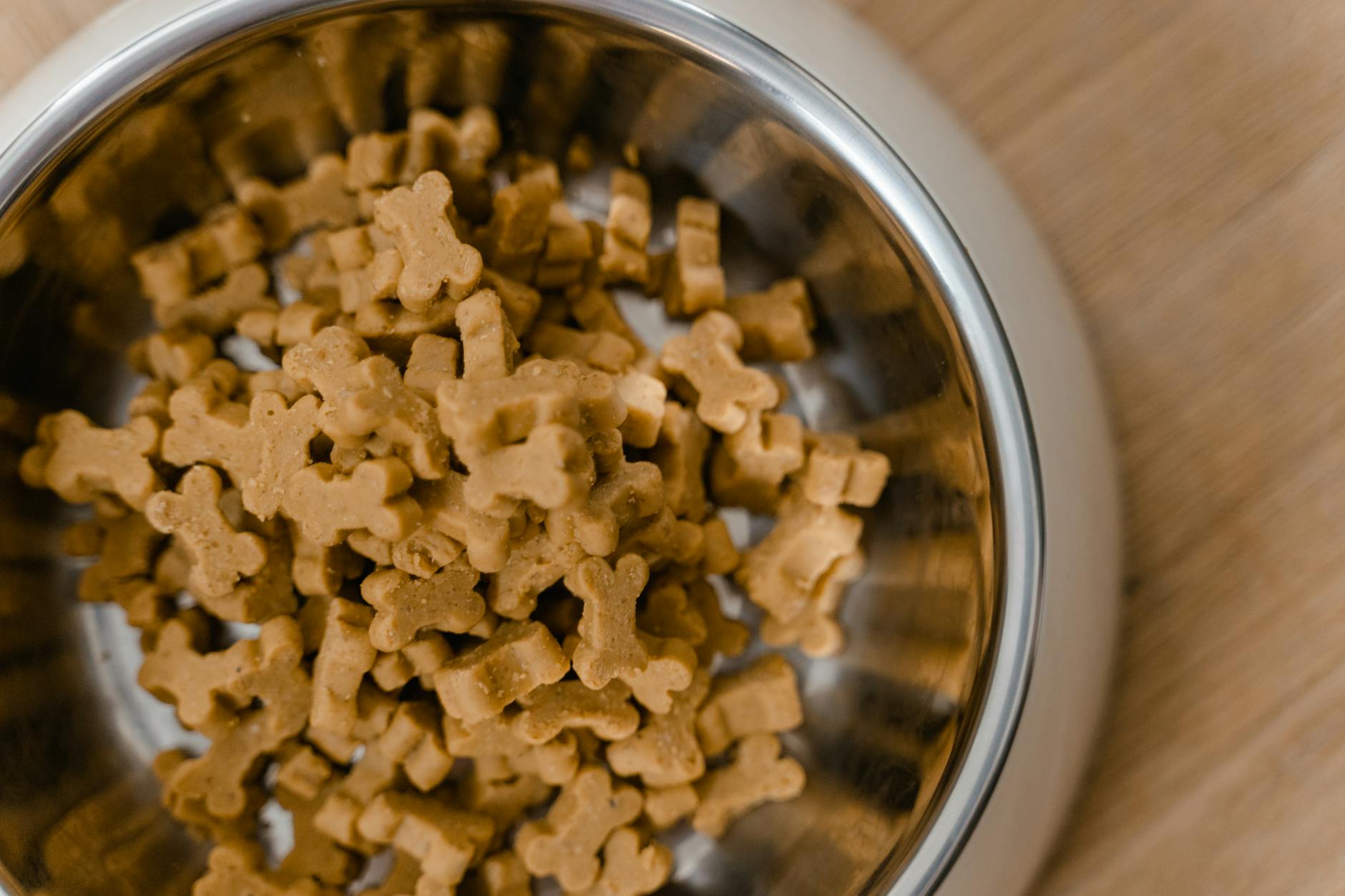
Step-by-Step Guide to Measuring Meals Accurately
- Determine the Daily Total: Calculate your dog's total daily caloric requirement and divide it by the number of meals you feed per day (typically two meals for adult dogs).
- Check Food Calorie Density: Locate the kilocalories per cup or per gram (kcal/kg) listed on your pet food packaging, usually found near the guaranteed analysis or feeding guidelines panel.
- Measure Level Portions: If using cups, fill the cup to the brim and scrape a flat edge across the top. If using a scale, place the clean bowl on the scale, tare it to zero, and add kibble until you reach the target gram weight.
- Account for Treats: Remember that training treats, dental chews, and table scraps contribute significantly to daily caloric intake. Deduct treat calories from the primary meal portions to prevent accidental overfeeding.
- Store Food Correctly: Keep kibble in an airtight container to preserve freshness and prevent moisture absorption, which can alter the weight-to-volume ratio over time.
Common Pitfalls in Canine Portion Management
Even dedicated pet parents can fall into traps that undermine their feeding strategy. Recognizing these frequent mistakes helps you maintain consistent, healthy habits for your dog.
- Relying on Eye-Ball Estimation: Using a random mug or cup instead of a proper measuring device almost always leads to portion creep over time.
- Ignoring Treat Calories: Giving high-calorie treats throughout the day without reducing meal sizes can easily push a dog into a caloric surplus. As a golden rule, treats should never exceed ten percent of your dog's total daily caloric intake.
- Failing to Adjust as Dogs Age: As dogs transition from active adulthood into their senior years, their metabolic rate slows down. Continuing to feed the same volume of food guarantees weight gain and places unnecessary stress on aging organs and joints.
- Forgetting to Recalculate After Neutering: Spaying or neutering reduces a dog's resting energy requirement by up to twenty to thirty percent due to hormonal shifts and decreased wandering behavior. Food portions must be adjusted accordingly shortly after the procedure.
- Sharing human table scraps without accounting for the hidden fats, sugars, and salts that rapidly accumulate extra pounds.
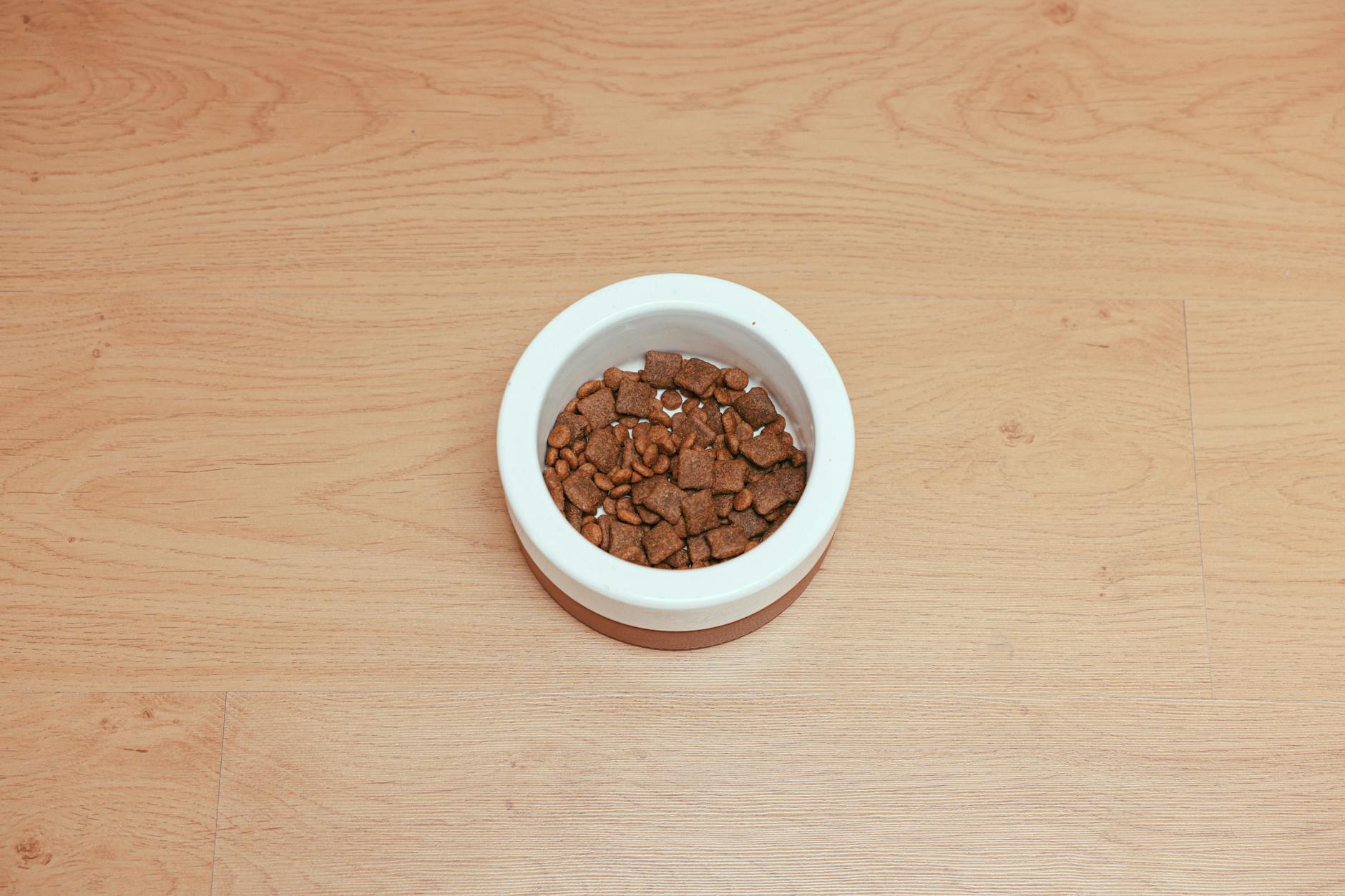
Signs Your Dog Is Overweight or Under-Portioned
Regularly assessing your dog's physical condition is vital to ensure your dog food portion control strategy is working effectively. Rather than relying solely on the bathroom scale, use a hands-on physical assessment known as the Body Condition Score (BCS), which typically uses a scale from 1 to 9 (where 1 is severely emaciated and 9 is morbidly obese).
An ideal BCS (around 4 or 5) means your dog has a visible waist when viewed from above and a distinct tuck in the abdomen when viewed from the side. You should be able to feel your dog's ribs easily under a minimal layer of fat without pressing hard. If the ribs are obscured by a thick fat layer, if there is no discernible waist, or if fat deposits are visible at the base of the tail, it is time to consult your veterinarian and reduce daily food portions gradually.
Conversely, if your dog's ribs, lumbar vertebrae, and pelvic bones are easily visible from a distance with no discernible body fat, your dog may be under-portioned or burning more calories than their current diet supplies. In such cases, gradually increasing food density or volume is necessary to restore healthy muscle mass and energy reserves.
Species-Specific Feeding Routines and Practical Meal Strategies
Establishing an effective feeding routine requires tailoring your approach to your dog's unique life stage, breed size, and activity profile. Developing a predictable schedule aids digestion, reduces anxiety around meal times, and reinforces good household manners.
- Puppies (2 to 12 Months): Puppies have massive energy demands relative to their tiny bodies. They typically require three to four small, nutrient-dense meals per day to support rapid skeletal and neurological development. Consult growth charts and adjust food quantities weekly as your puppy gains weight.
- Adult Dogs (1 to 7 Years): Most adult dogs thrive on two meals spaced twelve hours apart. This routine prevents gastric torsion (bloat) in deep-chested breeds and maintains steady energy levels.
- Senior Dogs (7+ Years): Senior canines require senior-formulated diets that feature lower calories, higher joint-supporting nutrients like glucosamine and chondroitin, and easily digestible proteins to preserve lean muscle mass without adding fat.
Professional Veterinary Guidance and Weight Loss Protocols
If your dog is clinically overweight (BCS of 6 or higher), embarking on a weight-loss journey requires professional veterinary supervision. Sudden or extreme caloric restriction can lead to nutritional deficiencies or dangerous metabolic conditions like hepatic lipidosis in rare cases. Your veterinarian can run diagnostic blood work to rule out underlying endocrine disorders such as hypothyroidism or Cushing's disease, both of which make weight management exceptionally difficult regardless of diet.
Once medical issues are ruled out, your veterinarian can calculate a safe, gradual weight loss trajectory—typically aiming for a safe weight loss of one to two percent of total body weight per week. Utilizing therapeutic veterinary diets formulated with high fiber and elevated protein can help your dog feel full while consuming fewer calories.
Frequently Asked Questions
How often should I feed my adult dog?
Most adult dogs thrive on two meals per day spaced roughly twelve hours apart. This schedule supports stable blood sugar levels, aids digestion, and prevents the stomach overload associated with single daily feedings.
Can I mix wet and dry dog food?
Yes, mixing wet and dry food is completely fine and often adds enticing texture and hydration. However, you must calculate the combined caloric contribution of both foods to ensure your dog remains within their daily energy limits.
How do I adjust food portions when starting a weight loss plan?
Consult your veterinarian before initiating a weight loss plan. Typically, veterinarians recommend reducing current feeding portions by ten to fifteen percent or switching to a specialized weight-management formula designed to maintain satiety while lowering calories.
Are breed-specific feeding guidelines accurate?
Breed guidelines provide a general baseline, but individual metabolism, activity level, and spay/neuter status mean you must tailor portions to your specific dog rather than relying purely on breed averages.
When should I transition my puppy to adult food portions?
The transition timing depends on your puppy's breed size. Smaller breeds usually transition around 10 to 12 months, while large and giant breeds may continue puppy formulations and growth-monitoring until 18 to 24 months of age.
What should I do if my dog constantly begs for food?
Constant begging often stems from boredom or behavioral habits rather than true hunger. Utilize interactive puzzle feeders, slow-feeder bowls, and mental enrichment strategies to satisfy your dog's foraging instincts without increasing food portions.
When should I consult a vet about my dog's weight?
Schedule a veterinary checkup if your dog experiences rapid, unexplained weight gain or loss, or if you are unsure how to safely adjust portions for a medical condition or senior life stage.
Helpful PawPrintHub Tools
To support your journey in canine nutrition and wellness, explore these helpful interactive tools designed for pet parents:
- Pet Food Portion Calculator: Determine precise daily feeding amounts tailored to your dog's unique profile.
- Dog Age Calculator: Understand your canine's developmental life stage to adapt nutritional strategies accordingly.
- Pet Healthy Weight Checker: Evaluate your dog's body condition score and ideal weight targets.
By mastering dog food portion control and staying vigilant about daily calorie intake, you ensure a long, vibrant, and healthy life for your cherished companion. Consistency, accurate measuring tools, and regular body condition assessments form the unbeatable triad of successful canine nutritional management.
Support free pet guides and tools.
Buy Me a Coffee
Comments
Post a Comment