
Cat Calorie Calculator & Feeding Guide: How to Determine Daily Energy Requirements
Ensuring your feline companion maintains an optimal body condition is one of the most impactful responsibilities of pet ownership. Overfeeding or underfeeding can lead to significant health challenges over time, ranging from feline obesity and joint strain to nutritional deficiencies. Understanding your cat's exact daily energy requirements goes beyond simply following the vague serving suggestions printed on commercial pet food bags. By using a specialized Cat Calorie Calculator, cat owners can decode nutritional labels and establish precise portion controls tailored to their pet's unique life stage, activity level, and metabolic rate.
Every domestic feline possesses a unique biological blueprint that dictates how they process macronutrients. Unlike omnivores, cats require precise balances of animal protein, specific fatty acids, and essential vitamins that cannot be synthesized by their bodies. Because their evolutionary history as solitary hunters designed them to consume small, frequent prey meals throughout the day and night, their modern feeding schedules often require careful human management. When we fail to match caloric intake with energy output, the scale can quickly tip toward weight gain, placing undue stress on their cardiovascular and musculoskeletal systems. Conversely, restrictive feeding without proper calculations can lead to lethargy, poor coat quality, and compromised immune responses. This comprehensive guide will walk you through the exact science of feline nutrition, step-by-step calculation methods, practical daily routines, and strategies to prevent common feeding mistakes.

Disclaimer: This article is for educational and informational purposes only and does not replace professional veterinary nutritional counseling. Always consult your veterinarian before making drastic changes to your cat's diet, especially if your cat has underlying health conditions.
Understanding Feline Energy Requirements
Cats are obligate carnivores with unique metabolic pathways that differ significantly from dogs and humans. They require specific amino acids, such as taurine, arginine, and specific forms of vitamin A, alongside high levels of animal-derived protein to function correctly. Their daily energy expenditure is measured in kilocalories (commonly referred to simply as calories), which must be supplied through their daily meals to maintain stable body weight and vital biological functions.
To determine how many calories a cat needs, veterinarians rely on calculating two primary metrics: Resting Energy Requirement (RER) and Maintenance Energy Requirement (MER). RER represents the baseline amount of energy an animal consumes while resting in a thermoneutral environment to sustain vital organ functions such as respiration, circulation, and cellular repair. MER builds directly upon RER by factoring in variables such as age, neutered status, indoor lifestyle, environmental temperature, and overall daily physical activity.
Understanding the distinction between RER and MER is critical for any cat parent attempting to manage weight. RER remains relatively constant based strictly on body weight, whereas MER fluctuates dynamically depending on lifestyle changes. For example, if your cat transitions from an indoor couch potato to an adventurous harness-trained explorer, their MER will increase, requiring a corresponding upward adjustment in daily caloric intake to prevent unintended weight loss. Recognizing these metabolic shifts allows you to proactively adjust meals before weight fluctuations negatively impact your cat's overall health and vitality.
How to Calculate Your Cat's Daily Calories
Calculating your cat's caloric needs manually involves a multi-step mathematical process based on body weight in kilograms. Fortunately, tools like the Cat Calorie Calculator automate this process to give you an immediate, accurate target.
The standard veterinary formula for calculating Resting Energy Requirement (RER) for adult cats typically follows this equation:
- Weight in kilograms raised to the power of 0.75, multiplied by 70. Alternatively, for cats weighing between 2 kg and 6 kg, a simplified linear formula is often used: (Body Weight in kg × 30) + 70.
Once you have established the baseline RER, you apply a specific multiplier to determine the Maintenance Energy Requirement (MER) based on your cat's life stage and lifestyle:
- Neutered adult indoor cat: RER × 1.2 (Standard for most sedentary house cats)
- Intact adult cat: RER × 1.4 (Requires higher baseline energy due to hormonal activity)
- Weight loss target for overweight cats: RER × 0.8 to 1.0 (Calculated using ideal target weight, not current weight)
- Weight gain or active outdoor cat: RER × 1.4 to 1.6 (Supports high energy expenditure)
- Senior cat (11+ years): RER × 1.1 to 1.4 depending on muscle mass and activity levels
Let us walk through a practical example. Imagine you have a neutered indoor adult cat weighing 4.5 kilograms (approximately 10 pounds). First, we calculate the RER: using the simplified formula, (4.5 × 30) + 70 = 205 kcal. Next, we apply the standard neutered indoor multiplier of 1.2: 205 × 1.2 = 246 calories per day. This gives you a precise baseline target to start portioning out their daily food.

Translating Calories into Actual Food Portions
Once you know your cat's target daily calorie intake, the next crucial step is translating that number into actual cups, grams, or cans of food. Commercial cat foods vary wildly in caloric density. Some dry kibbles pack over 450 calories per cup due to concentrated starches and fats, while high-moisture wet canned foods might contain fewer than 80 calories per small can due to their high water content.
To ensure absolute accuracy in your daily feeding routine:
- Check the pet food label for the "kcal/kg" or "kcal/cup" or "kcal/can" guaranteed analysis and nutritional adequacy statement.
- Divide your cat's total daily calorie requirement by the caloric density of the specific food you are feeding.
- Weigh your food using a digital kitchen scale in grams for ultimate precision rather than relying on standard kitchen measuring cups, which often lead to accidental overfeeding due to packing and air pockets.
- Account for any treats, toppers, or supplements given throughout the day, ensuring they do not exceed 10% of the total daily caloric allowance.
For a streamlined approach to portion planning, you can also explore the Pet Food Portion Calculator to cross-reference your findings and manage multi-pet households efficiently.
Factors That Influence Feline Metabolism
Not all cats process energy the same way. Several biological, hormonal, and environmental factors alter daily caloric needs and must be monitored closely over time:
1. Neutered or Spayed Status
Sterilization is one of the most significant factors affecting metabolism. Spayed or neutered cats experience a sudden drop in metabolic rate—often up to 20% to 30% lower than intact cats—and frequently show a decrease in spontaneous daily activity while simultaneously experiencing an increased appetite driven by hormonal shifts. Therefore, sterilized cats require fewer calories than intact cats of the same weight and age to avoid rapid weight gain.
2. Age and Life Stage
Growing kittens have extraordinarily high energy demands to support rapid bone, organ, and muscle development, often requiring two to three times the caloric density per pound compared to a sedentary adult cat. Kittens should generally be fed free-choice or multiple scheduled meals of high-calorie growth formulas until they reach skeletal maturity. Conversely, senior cats (typically aged 11 and older) may experience changes in lean muscle mass, decreased digestive enzyme efficiency, and altered nutrient absorption, requiring careful calorie adjustments to maintain muscle without overloading internal organs or worsening age-related joint stiffness.
3. Indoor Versus Outdoor Lifestyle
Indoor cats typically burn far fewer calories due to a more sedentary, predictable environment. Owners must actively provide environmental enrichment—such as interactive wand toys, food puzzle boards, climbing towers, and automated motion toys—to encourage physical movement and prevent boredom eating or behavioral lethargy.
4. Ambient Temperature and Coat Thickness
Cats living in drafty, cooler indoor environments or outdoor setups expend more energy regulating their body temperature, especially shorthaired breeds. Conversely, cats in climate-controlled indoor homes maintain stable thermoregulation energy expenditures year-round.
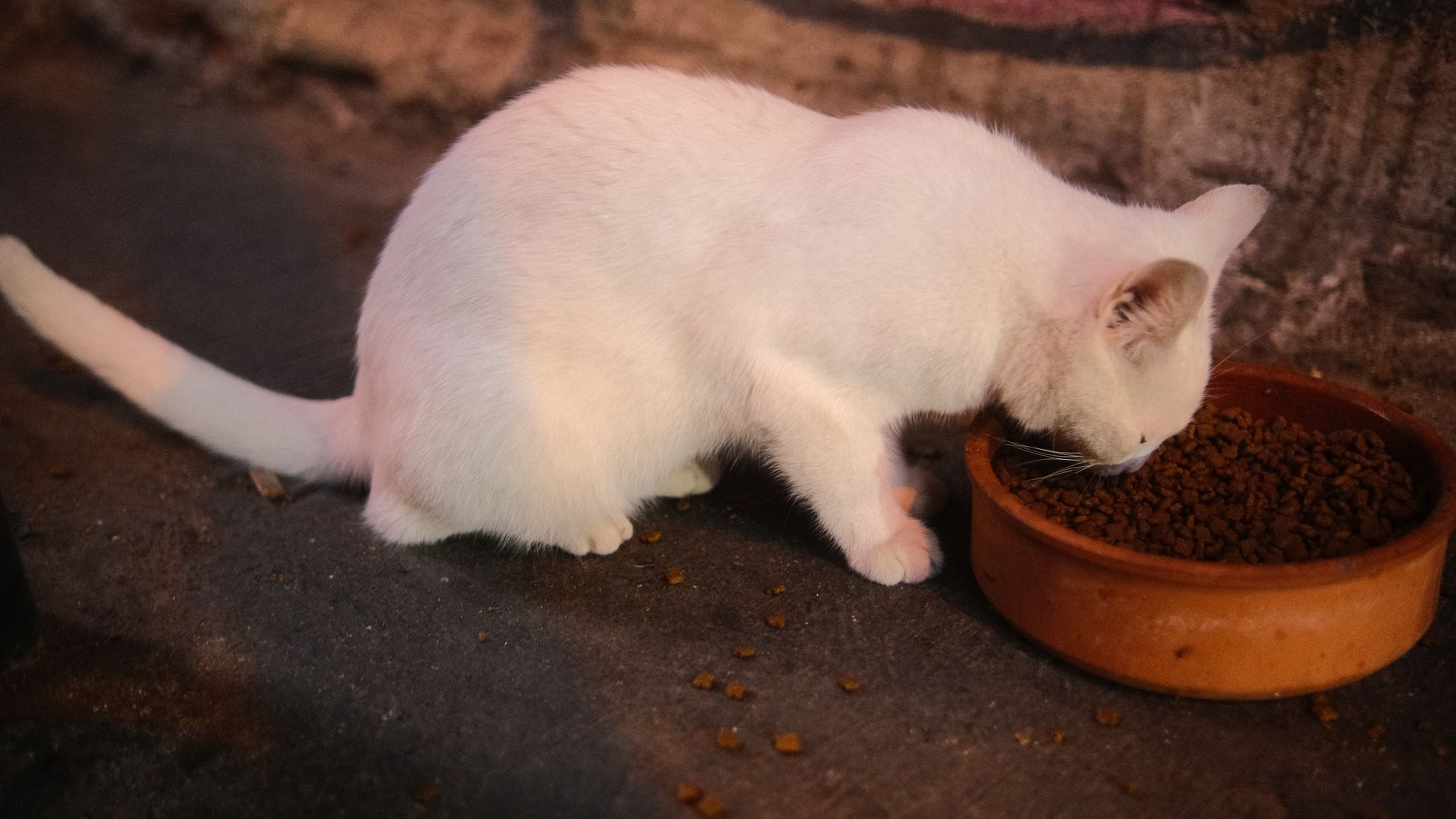
Step-by-Step Daily Feeding Routine for Cats
Establishing a predictable, structured feeding routine supports both physical digestion and emotional well-being in felines. Here is a recommended daily routine to implement:
- Morning Meal (Breakfast): Measure out the first portion of your cat's daily food allowance using a digital scale. Serve in a shallow, wide ceramic or stainless steel bowl to prevent whisker fatigue. Pair breakfast with a brief interactive play session to stimulate their natural hunt-catch-eat cycle.
- Midday Enrichment: Instead of leaving food out, place a small portion of kibble or freeze-dried treats inside an interactive puzzle feeder or foraging mat. This prevents midday boredom and slows down rapid eaters.
- Evening Meal (Dinner): Weigh and serve the remaining portion of your cat's daily caloric allotment. If you practice mixed feeding (combining wet and dry food), evening is an ideal time to serve high-moisture canned food to support urinary tract hydration.
- Nighttime Wind-Down: Remove any unconsumed wet food after 30 minutes to prevent bacterial growth. Ensure fresh, filtered water is available in multiple locations throughout your home.
Common Mistakes in Cat Feeding Routines
Even well-meaning pet parents often fall into common nutritional traps that sabotage their cat's health over time:
- Free-Feeding Dry Kibble: Leaving a bowl full of food out all day encourages mindless grazing, eliminates portion tracking, and makes it impossible to identify if a cat has stopped eating due to dental or internal illness.
- Ignoring Treat Calories: Commercial treats can easily account for 20% to 30% of a cat's daily intake if not factored into the total calorie budget. Always subtract treat calories from the main meal allocation.
- Guessing Portions with Scoops: Eyeballing food scoops almost always leads to overfeeding over time due to human error and inconsistent cup packing.
- Failing to Monitor Body Condition: Relying solely on bathroom scales rather than checking your cat's rib palpation and waistline definition. Muscle loss can easily mask fat gain on a scale.
- Sudden Diet Switches: Transitioning between cat foods too quickly often triggers acute vomiting, diarrhea, and food refusal. Always transition new foods gradually over 7 to 10 days.
When to Consult a Veterinarian
If your cat experiences sudden, unexplained weight gain or weight loss despite a strictly controlled feeding routine, schedule a veterinary examination immediately. Unexplained weight fluctuations can be early warning signs of underlying medical conditions such as hyperthyroidism, diabetes mellitus, chronic kidney disease, inflammatory bowel disease, or severe dental pain that makes chewing difficult. Additionally, if your cat suddenly stops eating for more than 24 hours, veterinary intervention is urgently required to prevent the onset of hepatic lipidosis (fatty liver disease), a dangerous and potentially fatal condition unique to felines experiencing prolonged anorexia.
Frequently Asked Questions
How many calories should an average indoor adult cat eat daily?
Most neutered indoor adult cats weighing around 10 pounds (4.5 kg) require between 180 and 220 calories per day, though this varies based on individual activity levels, age, and metabolism.
How can I tell if my cat is at a healthy weight?
You should be able to easily feel your cat's ribs with a slight, delicate fat covering, and your cat should exhibit a distinct, noticeable waistline when viewed from above and an abdominal tuck when viewed from the side.
Should I combine wet and dry food in my cat's diet?
Yes, mixed feeding is common and highly beneficial because wet food provides essential hydration supporting urinary health while dry food offers convenience. Always calculate the combined total calories from both food types.
Why is my cat always begging for food after I reduce portions?
Cats on weight loss programs often beg because their stomach stretch receptors and hormonal satiety signals (like peptide YY) are not fully triggered by smaller volumes. Using puzzle feeders, slow-feed bowls, or splitting meals into smaller, frequent portions throughout the day can help manage begging behavior.
Do senior cats need more or fewer calories?
Many senior cats (over 11 years old) actually require slightly more calories than middle-aged adult cats to maintain healthy body weight and lean muscle mass due to decreased nutrient absorption efficiency, though cats with severe mobility issues or arthritis may require fewer calories due to inactivity.
How do I transition my cat to a weight loss diet safely?
Transition slowly over 7 to 10 days by mixing the old food with the new reduced-calorie formula in increasing proportions. Always calculate the target calories based on your cat's ideal target weight, not their current heavy weight, and aim for gradual weight loss of 0.5% to 2% of body weight per week.
Can I use regular kitchen measuring cups for cat food?
While standard kitchen measuring cups are convenient, they are notoriously inaccurate for measuring pet food because kibble settles unevenly and creates air pockets. Using a digital kitchen scale in grams is the gold standard for precision.
Helpful PawPrintHub Tools
To help you manage your cat's health and nutrition journey, explore these complementary tools:
Support free pet guides and tools.
Buy Me a Coffee
Comments
Post a Comment